






Although ‘pamana’ in Filipino means inheritance, what is inherited is only part of the story. Its meaning continues to evolve through the people who carry it forward. This idea is at the core of Pamana: Tanglaw, the most recent collection by Filipino industrial designer Joshua “Joshi” Li. He presented it last September 19 as part of his launch in collaboration with the Ayala Museum, and the collection explores how familiar stories, symbols, and craft traditions can gain new relevance through contemporary design and fabrication.
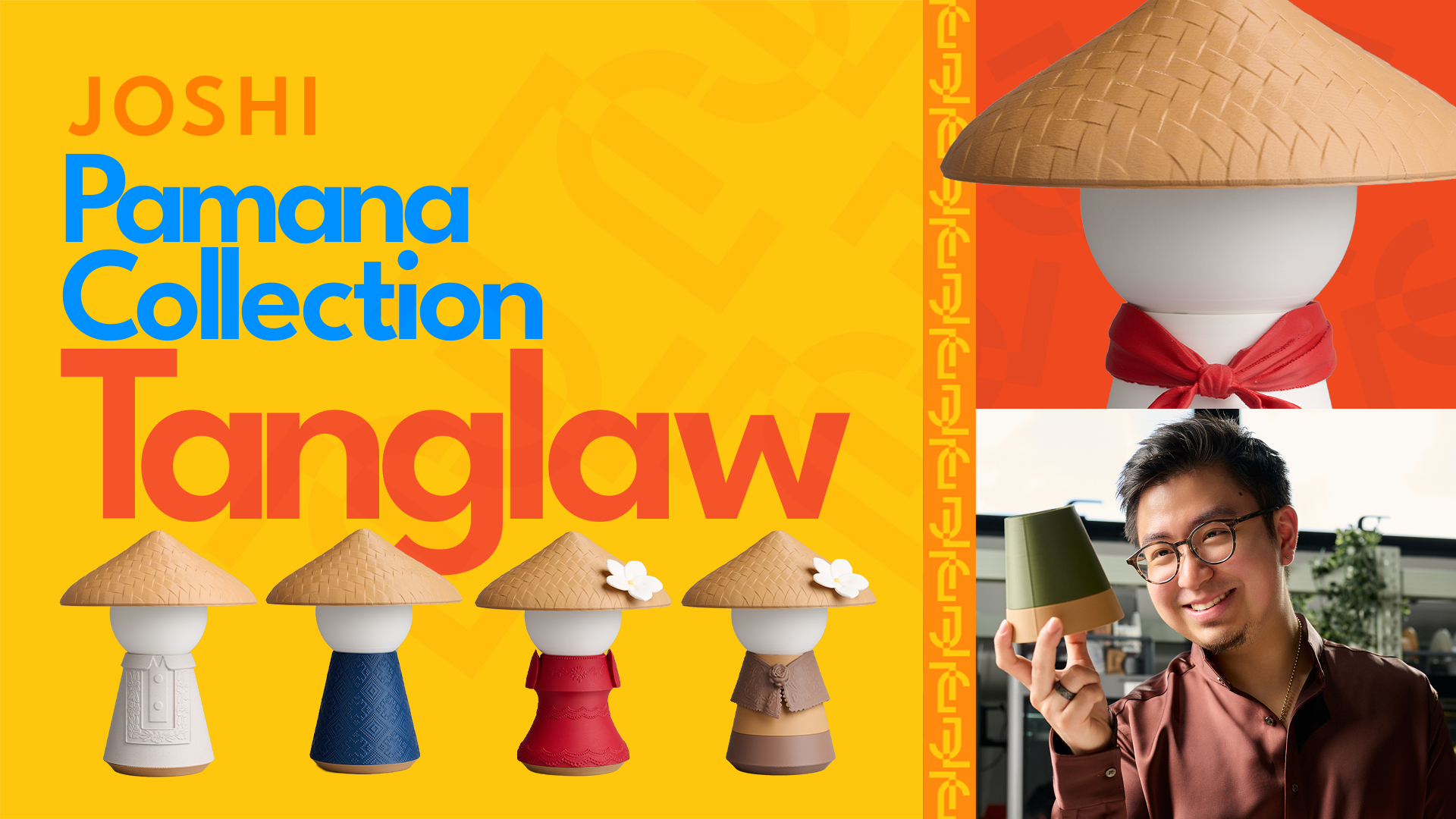
As an Ancestral Futurist, Joshi’s work is built on the belief that heritage can find new expressions in new contexts. Through the Pamana: Tanglaw, he explores how inherited ideas can be carried forward through contemporary forms. He shares that the collection began with an unexpected source of inspiration, which would eventually shape his approach to design.
“The Pamana Collection grew out of the Tanglaw series. One day, driving through our farmland, I became fixated on what our farmers wore: the salakot. I’d seen it my whole life, but never as an industrial designer. I’d long been searching for what form follows, and that day I found my answer: form follows culture. Artists and designers vary in their mediums. My medium is products, so as a proud Filipino industrial designer, I set out to translate that sense of pride into functional art, pieces that are both conversational and utilitarian.”
Tanglaw: Why Light?

Inspired by the role of light in the Filipino home, Pamana: Tanglaw brings together a series of 3D-printed lighting pieces that draw from different aspects of Filipino identity. The Filipino word tanglaw translates to “light,” but for Joshi, the idea goes beyond illumination.
“Tanglaw means beacon, and I’ve always thought of light as a guide. It’s a light from the past, carrying our history, our culture, the stories we grew up with, and lighting the path ahead.”
Throughout the Philippines, light has long carried emotional meaning within the home. It marks moments of gathering and celebration. It welcomes loved ones back through the door. It becomes a quiet signal of comfort, presence, and belonging.
This understanding became the collection’s emotional foundation.
“Tanglaw, for me, is a collection of those stories, lit long ago and now illuminating our future, and there’s no better way to carry them forward than adapting them through modern technologies.”
The theme also carries a personal significance for Joshi.
“Light runs in my family. We’re in the lighting business, and I grew up watching my mom’s passion for it until it became mine too. Light is hopeful. It guides people through their darkest days, and that makes it a meaningful medium to design with.”
Rather than approaching lighting as a purely functional object, Joshi saw it as an opportunity to explore the role light plays in everyday life and memory. With Pamana: Tanglaw, light becomes both medium and metaphor, shedding light not only on physical spaces, but on the stories, traditions, and identities woven into them.
Five Stories, One Family
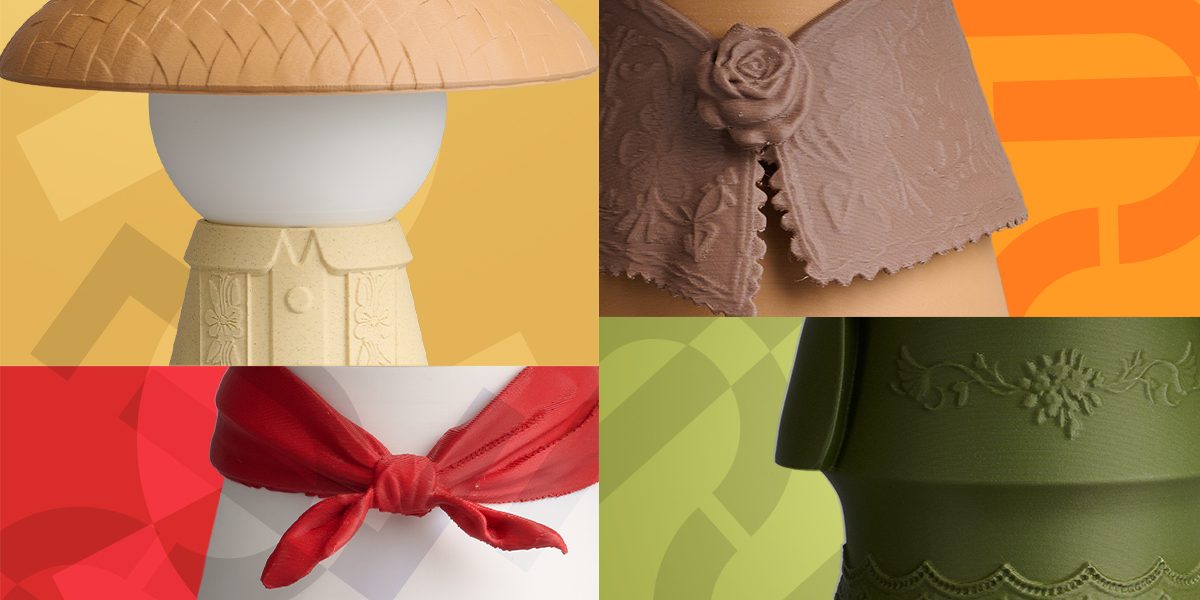
While each piece in Pamana: Tanglaw tells a different story, none were conceived as standalone objects. At the heart of the collection is a shared silhouette: a woven salakot resting above a gently illuminated form. Familiar and unmistakably Filipino, the silhouette acts as a common thread, connecting five distinct interpretations of identity into a single visual family.
Joshi approached the narrative as a collection of interconnected stories, each shining light on a different aspect of Filipino tradition. Some draw from recognizable garments such as the Barong and Filipiniana, whose forms have come to symbolize dignity, pride, and cultural tradition. Others reference figures like the Katipunero and Maria Clara, whose stories still hold a meaningful place in the Filipino imagination. Even Habi, inspired by the country’s rich weaving traditions, speaks to generations of makers whose knowledge has been passed from hand to hand over time.
The collection translates the traditional references into subtle textures, silhouettes, and details. Embroidery becomes a pattern. Weaving becomes geometry. Distinctly Filipino forms are distilled into contemporary objects that remain connected to their origins. Each lamp tells its distinct story, yet together they convey a broader portrait of Filipino identity, one that still evolves while remaining anchored in shared histories.
Technology as a Tool for Telling Stories in New Ways
While Tanglaw draws from tradition, 3D printing—thoughtfully crafted with sustainable PLA—makes its forms possible. This allowed Joshi to explore creating traditional intricate textures, details, and forms through modern methods. This approach expresses the belief that innovation and tradition do not oppose one another. When used thoughtfully, new technologies can become another way of engaging with inherited knowledge.
“The juxtaposition of telling stories from the past through futuristic, contemporary fabrication like 3D printing is exactly what being an ancestral futurist means. Finding a new way to carry and express our history through disruptive manufacturing is proof that the past isn’t meant to simply be preserved, but to evolve alongside new generations.”
Carrying Pamana Forward
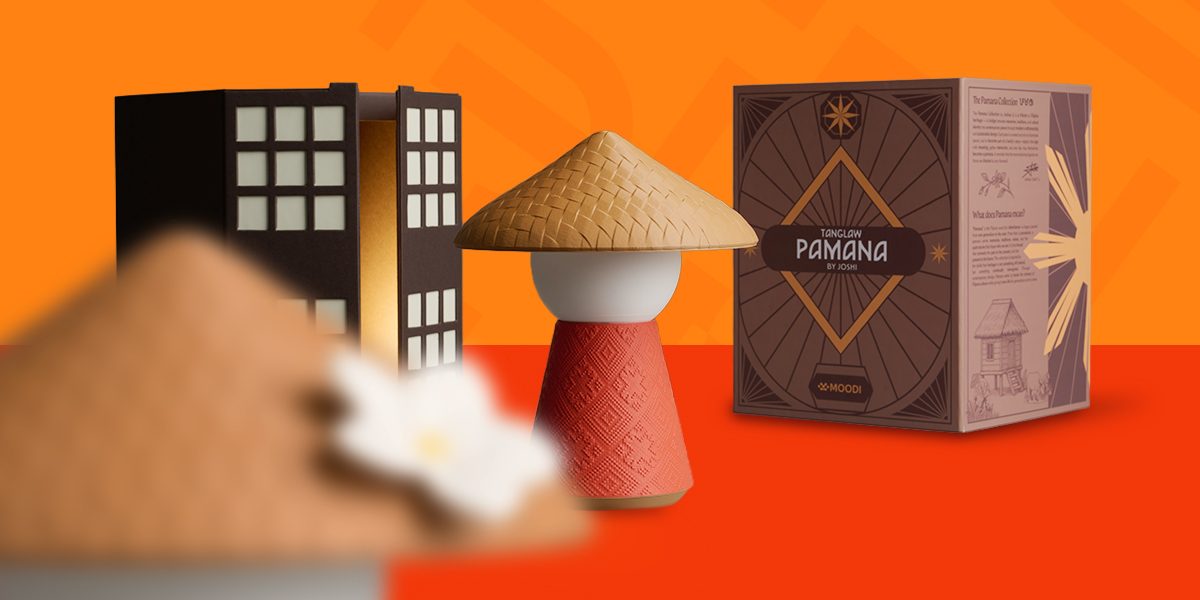
At its core, Pamana: Tanglaw demonstrates that contemporary Filipino design does not need to choose between custom and progress. Ideas and stories passed down can take new forms, while contemporary tools can become new ways to express Filipino culture. Asked what he hopes people take away from the collection, Joshi returns to the same belief that inspired it from the beginning:
“I hope people take away that this isn’t a question of whether something ancestral can live alongside something futuristic. The collection is proof that it already does. This is it; it exists.”
Ultimately, his work invites us to see inheritance as something each generation helps shape and carry forward.
“I want my generation, and the ones after it, to see that history isn’t meant to simply be preserved. It can evolve with each generation that chooses to carry it. It’s not something left behind and forgotten; it’s something we keep working with, remembering, and reinterpreting through the technologies of our time, 3D printing being one of them.
And for the older generation, I hope they see what modern technology is capable of while still being rooted in who we are as Filipinos and as designers, and that it gives them a different lens on what product design can be.
Most of all, I hope it inspires others to become ancestral futurists themselves and carry it forward.”
—
Pamana: Tanglaw is available for viewing and purchase at the Ayala Museum Shop, Kultura, Design Story, and the Moodi Design Website moodidesign.ph. The Tanglaw Lamps are Php12,000 each, and the Tanglaw Mini Blind Boxes are Php799 each.
For inquiries and more information on the collection and the designer:
Website: moodidesign.ph
Facebook: Moodi Design
Instagram: @joshi.dsgn